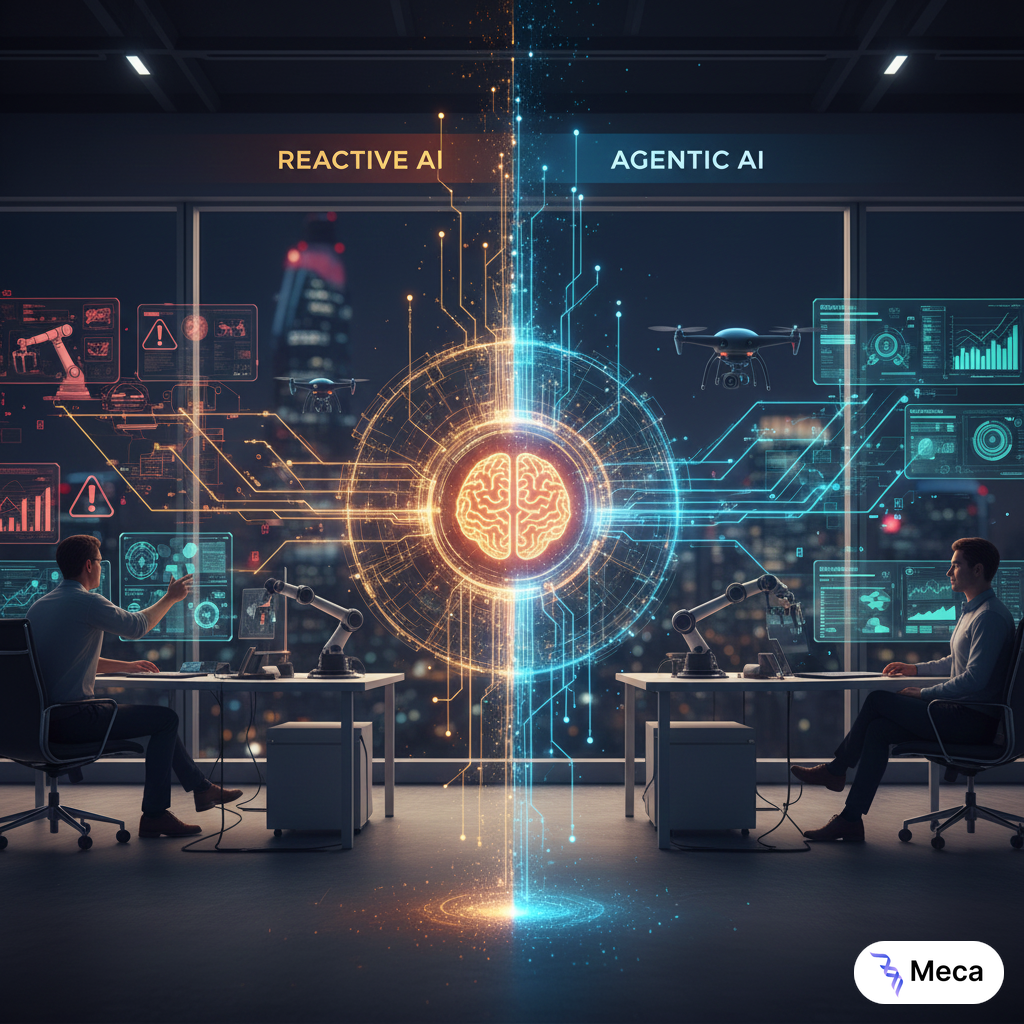
Autonomous AI: Your Unfair Operational Advantage Now
Market leaders are deploying autonomous agentic AI systems that transform operations from task automation to outcome ownership, creating strategic competitive advantages.
While your competitors debate AI strategy, market leaders are already deploying autonomous agentic systems that fundamentally transform operational capabilities. The gap between reactive automation and true AI autonomy isn’t theoretical—it’s today’s competitive battlefield where months of implementation translate to years of market advantage.
The Evolution: From Automation to Autonomy
What if your AI didn’t just execute tasks—but owned outcomes? Agentic AI represents a fundamental shift from automation-as-efficiency to AI-as-strategic-partner. Unlike traditional AI’s stimulus-response model, these systems leverage Large Language Models as reasoning engines to anticipate needs, identify patterns, and take initiative before issues escalate.
The operational transformation:
- Reactive AI: Waits → Processes → Responds
- Agentic AI: Monitors → Anticipates → Acts
This isn’t incremental improvement—it’s autonomous operational partnership.
Why This Creates Competitive Advantage Now
Research shows agentic systems operate through five foundational patterns—tool use, reflection, planning, iterative reasoning, and multi-agent collaboration—enabling them to complete goals autonomously with minimal oversight.
Early adopters establish advantages competitors cannot quickly replicate:
- Faster market response through continuous environmental monitoring
- Reduced operational costs without proportional headcount increases
- Preventive operations replacing reactive crisis management
- 24/7 autonomous decision-making at scales human teams cannot sustain
Strategic Implementation: Five Competitive Differentiators
1. Operational Transformation Move routine decision-making from management to autonomous systems. Free leadership for strategic priorities while AI handles execution and optimization.
2. Market Velocity Proactive behavior driven by environmental awareness enables real-time adaptation at competitive speeds impossible for human-dependent operations.
3. Scalable Intelligence Deploy agents that dynamically allocate resources based on conditions—scaling operations without scaling overhead or complexity.
4. Risk Prevention Pattern recognition identifies and addresses potential issues before they impact operations. Shift from crisis response to preventive management.
5. Continuous Operations Autonomous awareness and responsiveness without human supervision requirements—your operations never sleep.
Real-world application: Supply chain operations using multi-agent collaboration to autonomously manage inventory, predict disruptions, and optimize logistics—continuously, proactively, at scale.
The Strategic Imperative
The transition from reactive automation to autonomous agentic systems isn’t a distant future—it’s the operational reality separating market leaders from followers today. Organizations that establish governance frameworks and deploy outcome-driven AI now will operate at speeds and scales competitors cannot match without fundamental restructuring.
The question isn’t whether to adopt agentic AI—it’s how quickly you can pilot systems before competitors claim first-mover advantages. Identify high-impact processes where outcome ownership drives differentiation, then move decisively.
At Meca, we guide enterprises through this exact transformation—from initial quick wins to production-ready agentic systems delivering measurable ROI within months, not years. Let’s discuss how autonomous AI can become your competitive advantage.
Related articles
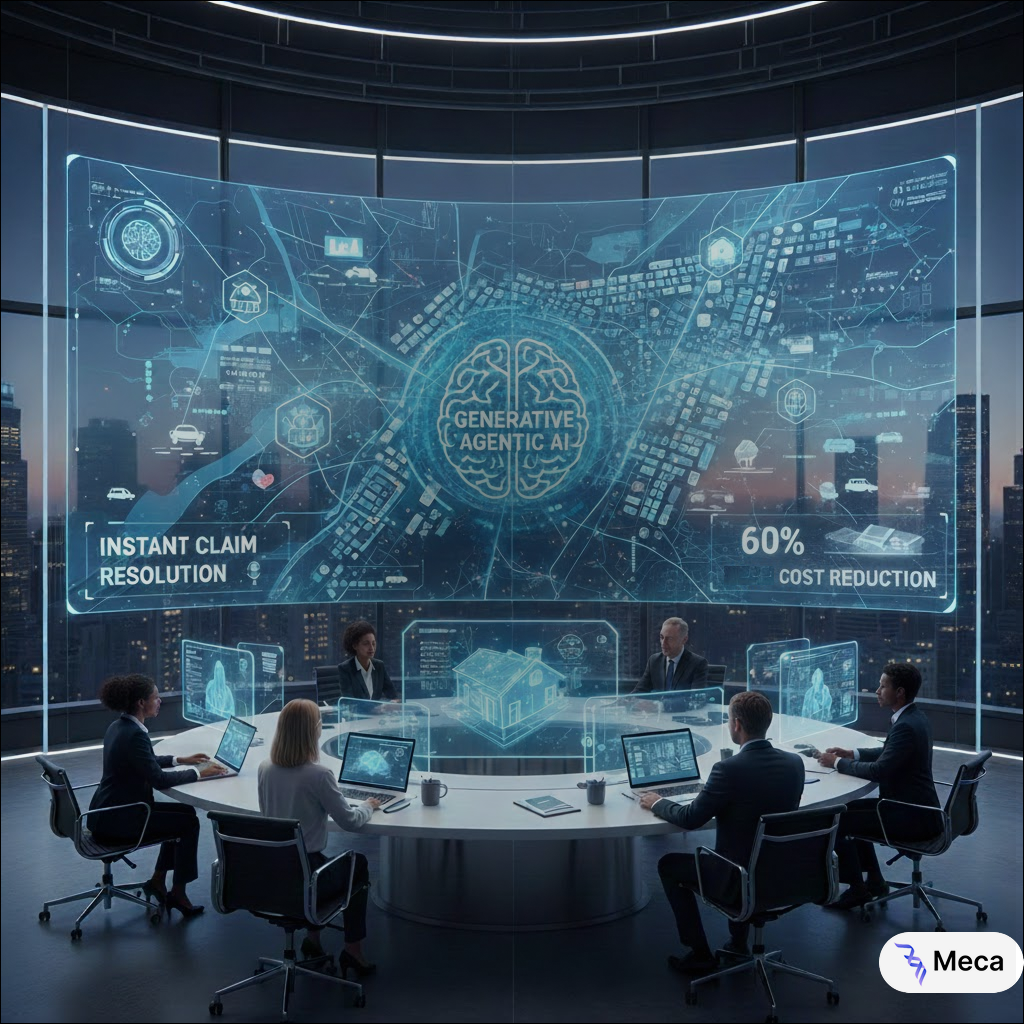
Beyond Pilots: How Agentic AI Delivers Real ROI in Claims Processing
Discover how Allianz transformed claims handling with autonomous AI while 85% of insurers fail to achieve positive ROI. Learn the architecture behind production-grade agentic systems.
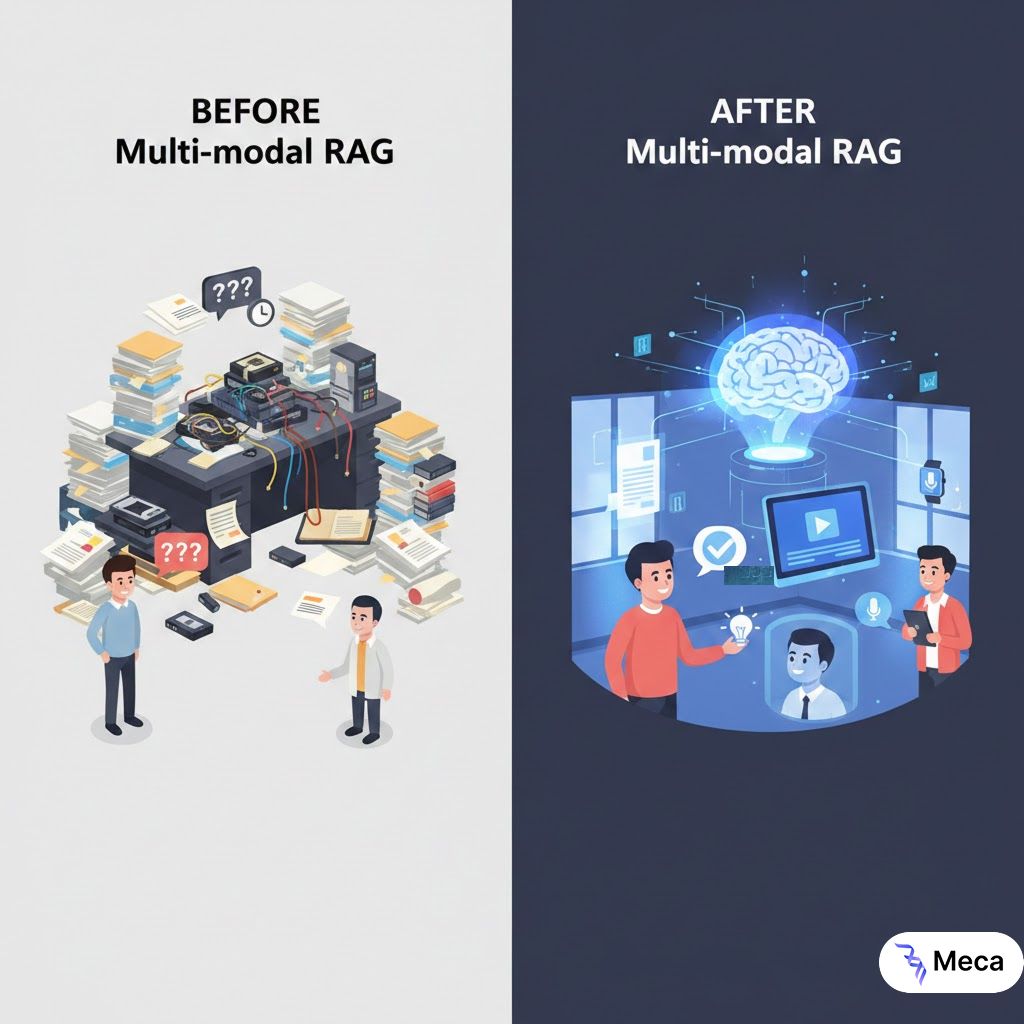
Cut Onboarding Time in Half with Multi-modal RAG Technology
Discover how multi-modal RAG technology transforms knowledge management across HR, sales, marketing, and technical teams by retrieving answers from thousands of documents. Dramatically reduce repetitive workload.

RAG: The Bridge Between LLM Power and Enterprise Trust
Discover how RAG architecture eliminates AI hallucinations by grounding LLMs in verifiable enterprise knowledge—without continuous retraining costs or operational complexity.